I know, I know. People have splintered into factions about whether the game lived up to its predecessor or if it tarnished its legacy, like the Scars and the Wolves. I take the side of the affirmative that this game, in many ways, lived up to the expectations and at times, exceeding the first one. Playing The Last of Us Part II felt like holding up a mirror to society, making us question the things we do and why we do them. Finishing the game was an exhausting, gruesome experience that I am sure will forever color my morality “grayer” than it has ever been. I will never be the same again after this game.
There are no more stars in the sky.
No matter how many factions we splinter into, we can all agree that entire premise of this game is revenge. It doesn’t shy away from violence. Which is why moments of peace and quiet create a sense of unrest. It is during these times that my mind goes into overdrive thinking “Fuck, something’s about to go wrong.” In most cases, my mind’s instincts are correct albeit never quite on point. I have to hand it to Naughty Dog in weaving vaguely frightening sensations that are littered all throughout the game. It’s like having the ability to foresee the future but it’s all murky. You can see shapes and figures yet can’t make sense of them. You just know shit’s about to go down and you can only prepare so much. You will get hurt.
I make fun of things I am not comfortable with.
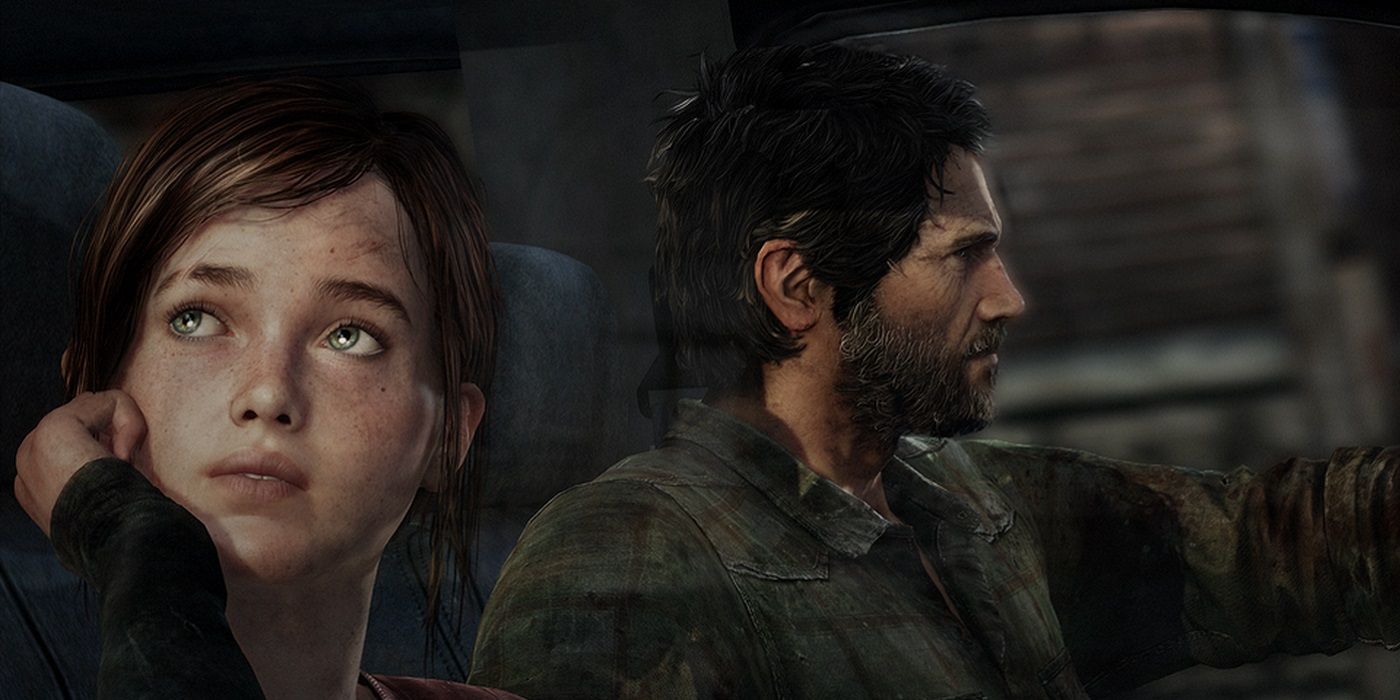
A golf club was all it took to set the gears into motion. And a few swings at an immobile target. This scene scarred me and my mind hasn’t begun to heal. I can barely imagine what Ellie must have felt while seeing her ‘father’ being murdered right in front of her. Seeing this the first time was heavy, and believe me when I tell you as the game goes on and we see flashbacks of Ellie and Joel’s relationship, the feeling weighs down on you even more.
I hated how Ellie treated Joel, although I understand why. After Joel’s “selfish” act at the end of the first game, Ellie had no choice than to carry the curse of being immune to the virus when she could have been the key to saving humanity. Think of all the lives that could have been saved had the operation pushed through. This was never explicitly stated in the game but I am certain it spurs and will spur Ellie for the rest of her life. And I am rarely certain about things. This is just one of the instances that make Joel’s death heavier as the game progresses.
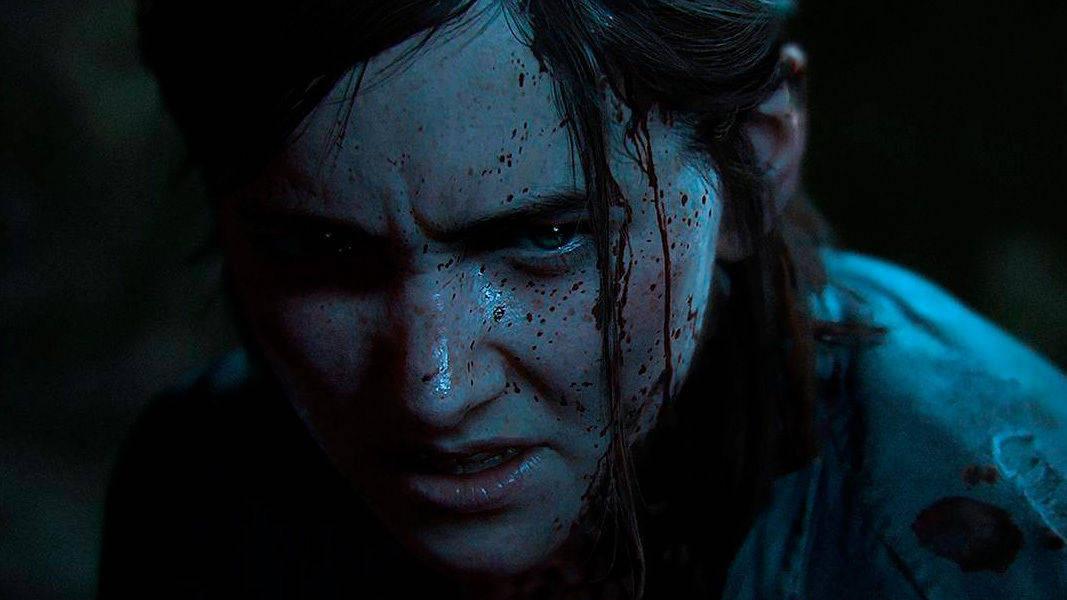
Those eyes…eyes that slowly lose their glimmer as the game progresses.
I was able to sympathize with Ellie and understand why she wanted to murder Abby. I did, too. The fact that Abby was literally saved by Joel and Tommy from the infected a few moments before killing him made me rage inside. “That’s fucked up”, I thought. But as Ellie massacred scores of people who “got in the way” (or “collateral damage“) of her dark crusade, people who had lives, aspirations, and reasons to live like her; sonder, I started to squint my eyes and tilt my head in confusion. In disagreement. I know, I know, if I were to see my dad’s head turn into a squashed squash, I wouldn’t stop for a breather to give him “justice”.
Just as I was at my wit’s end with Ellie after killing Owen and Mel (with the former sparing Ellie’s life early on), the game enters what I argue as its most visceral phase when Abby says “We let you both live and you wasted it“. Hearing those words chilled my entire body as if I were going through shock. I felt the sadness, the anger, the regret, everything that Abby was feeling.
Pain. Regret. Humanity.
Trauma.
The game masterfully takes a 180-degree turn and walks us through Abby’s life and why she did the things she did. Little by little, I began to understand and sympathize with Abby. My initial anger slowly sifted by going through her life, witnessing the complexities of her relationships, experiencing her heartbreaks, and everything else. Hate transformed into pain then into sympathy; I began sympathizing with her more than with Ellie.
The mirroring between her life and Ellie’s, in a way, made me realize that Abby’s aspirations weigh more than Ellie’s. What started as two separate quests for vengeance split into two different paths: one where you let vengeance consume you, dragging you down to the depths of self-inflicted hell; and the other, where you grab yourself by the reins and refuse, no matter how hard, to become the person you’ve set out to destroy. Both of them had that one cathartic moment which permanently changed how they see things for the rest of their lives. Both the death of their fathers.
In their own quests of vengeance, Ellie and Abby’s relationships took hits.
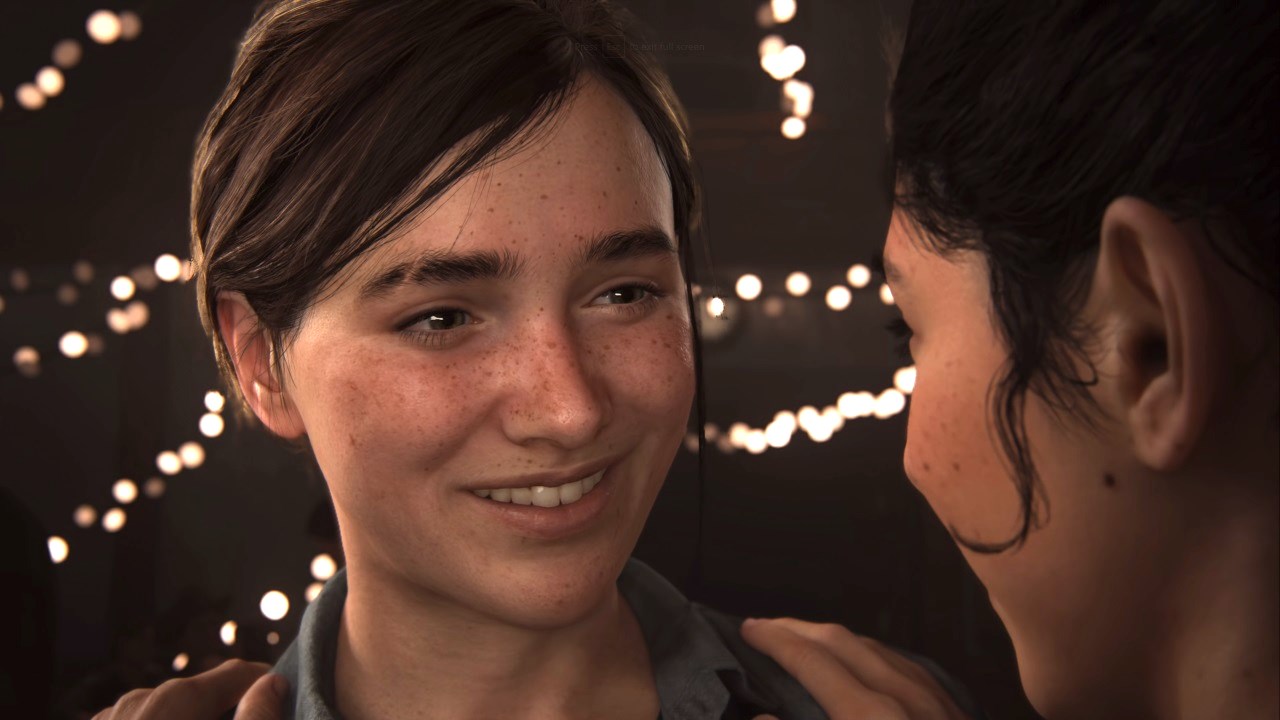
Ellie had everything from the start. A home. A community. A family. A humanity. With every gunshot fired, every throat stabbed, she lost them all starting with Joel, Jessie, and ultimately, Dina, spud, and their home. She was so consumed by vengeance that she let go of everything she had…and for what? For peace? She could have had it at the end yet she refused to kill Abby for reasons I still can’t quite comprehend. I don’t think I ever will. Down to rock bottom she fell from the highest heights.
She had everything.
Abby lost friends, too. Her dad, Owen, Manny (god rest his soul), Alice 😦 , Yara, Mel, I guess (she was a bitch). Her people, the Wolves, ostracized her for helping child Scars (I’ll tackle this in a separate blog). She lost more than Ellie. But she kept her head up and didn’t let herself be consumed by hate and vengeance. We literally see this during her confrontation with Ellie where, after beating her up and having the choice to kill her, Abby spares her life. An act of rebellion against everything she was feeling. This is why I admire Abby.
The story doesn’t end here.
Tired, beaten, barely human.
Even after being spared by Abby, Ellie still can’t let go. In their final confrontation, Ellie manages to barely overpower a months-long tortured, reluctant-to-fight Abby. My mind was begging Ellie to stop this arc and live in peace and leave Abby alone. I felt Abby’s unwillingness to fight her. The look on her face seemed like she detested the idea of ever fighting again. This look never went away as they were “fighting”. The scowl on both of their faces was gone, replaced by something tired, beaten, barely human visage.
What does Demon Slayer: Kimetsu no Yaiba tell us about good and bad people?
We were brought up to think that good and evil are constant forces against each other, taught to us by our parents, teachers, friends, or even some philosophers. They portray good and evil as black and white, no middle ground. On paper, it seems easy to project what our ideas of humans, heroes, and villains are. It was recently that the idea of a three-dimensional villain hit pop-culture in the form of MCU and DC Villains like The Vulture, Killmonger, Thanos, and recently, Joker. This roster of complex “bad guys” aren’t contained in the West. Kimetsu no Yaiba, an uprising anime with an already significant cult following, further blurs the lines between good and evil by portraying demons as humanly as possible, “forcing” us to sympathize with them.
These people, aliens, and demons were not written as evil-to-the-bones. They are not traditional in a sense that we struggle to hate them because we can relate to them, we understand or at least can empathize with what they went through. But by the end of the film, we surrender to the reality that they were good people forced to commit evil things for the sake of something they perceived as good.
No one was born evil.
Evil can’t be this cute!!!!
I have abandoned practice of my religion, Catholicism, yet I still firmly believe in some of its core teachings one of which is that man was born good as he was “made in the image and likeness of God.” Even if the God part was cut off you can still believe that man is born good. Think of a child after it is born. Sooner or later, it will cry and seek its mother to feed and that act is good for both since the child is looking to sate its hunger, while the mother is doing her role as one. In the strictest sense, this demonstrates how we are born good not simply by moral choices, but simply by being.
Marcus Aurelius, in a way, supports this claim when he wrote:
“We were born to work together like feet, hands and eyes, like the two rows of teeth, upper and lower. To obstruct each other is unnatural. To feel anger at someone, to turn your back on him: these are unnatural.”
He implies that humans are expected to work together, to do good to each other, and that to do differently would be unnatural, therefore not meant for us.
But if everyone was born good, how come evil exists? How come robbers rob, and at times, kill people? How come rapists violate their fellow people? How come drug lords, murderers are sometimes allowed to walk away as free men ordered by the courts, while the innocent ones are framed and sentenced to life imprisonment or even capital punishment? Why do these things happen if we were born “good”?
As a student of Stoicism, the reality of evil existing and humans as “innately” good beings were two things near irreconcilable for me. The whole Christian narrative of the God as the supreme good and the devil as an initially good creature turned into a being of pure malice, I admit, heavily influenced my understanding. Lately, however, I’m beginning to see palettes of colour beyond black and white thanks to the content that I consume, namely the aforementioned MCU movies and Demon Slayer, an anime and a manga.
Demon Slayer: Kimetsu no Yaiba
The rest of my “analysis” rely heavily on one’s knowledge about the manga/anime. Read the following for context.
Demon Slayer: Kimetsu no Yaiba, thrusts us into a world where there are people, demons, and demon hunters. Humans transform to demons after ingesting the blood of the demon daddy, Kibutsuji Muzan or demon Michael Jackson, granting them insane physical prowess, a near-immortal “life”, and the ability to rapidly regenerate body parts so long as their heads remain in tact. And when one gets lucky, it also gains special powers called “Blood Demon Arts” alongside a vampiric weakness to sunlight. It’s also important to note that these demons gradually lose the memories of their past human lives. Demon slayers on the other hands, are who their title suggests. They are normal human beings who stand against demons to protect humanity. The odds might seem against their favor but these same humans are trained to modify their breaths in a particular style which allows them to reach the peak physical condition of humans. This allows them to stand toe-to-toe against demons…for a time. After going through horrendous training needed to fight demons, demon hunters are given special blades which are the only alternative method of killing said creatures apart from sunlight.
Unrelated but does it have to? It’s Nezukoooo
In both manga and anime, we get a glimpse of who some demons were when they were still human after Tanjiro, our main protagonist, slices their heads off. These key moments are what sets apart Japanese artwork from the rest as the demons portrayed post-execution were humans who were mistreated by their parents, by society, hell even by the world, to the point that you almost couldn’t blame them for succumbing to Muzan’s offer for a “better “life””.
Good and Evil? Black and White?
I cannot blame you for still thinking that good and bad are as contrasting as black and white. Because to do so would mean I exact the same judgement to you. If you’re still here, be ready.
Rui – Lower Moon 5
For those of you familiar with Kimetsu no Yaiba, you would have hated this guy at the beginning. After all, how could we forgive anyone who’d dare separate Nezuko from her brother, Tanjiro? But as we watch in awe on how majestic the artists recreate the scene in the anime, we get to peer deeper into who Rui was in his previous life.
He hurt Nezuko. Of course he’s “bad”.
Rui was a Lower Moon demon. As you might expect, for one to possess a title for any kind of work meant he or she was someone of power. That applied to Rui, a young boy who turned to a demon. You’re probably wondering why he accepted Muzan’s offer, it’s because Rui suffered from a crippling disease which granted him such a frail body that walking and breathing were chores. As a result, and in a way, a “balance”, he was blessed with parents who loved him deeply and aided him in his short life. Put yourself in Rui’s place and imaging living 8 or more years in such condition. It’s only natural to feel some frustration over your body or even towards fate. This negative emotion, in my theory, is what attracted Muzan. He offered Rui the chance for a better “life”, and you might expect, he took it. Finally living his dream, Rui lived a “normal life” up until the hunger kicked in. His parents, after discovering Rui slew and ate someone in their home, decided to do what they thought was best: his father tried to kill him. Obviously failing, the young demon, in a fit of rage and of self-defense, killed both, thinking that his real parents wouldn’t do that. On her dying breath, Rui’s mother apologized to him for failing to give him a normal human body which would have prevented all of this from happening. From this point onward, Rui “lived” in denial and in desire to feel the love of a family, which explained why he did those things in the manga/anime.
All he wanted was to apologize to his parents.
Take all of that in. Now imagine once more that you are Rui. What would you have done? You were born with that disability, then one “man” offers a cure. You took it without being informed of the consequences. Will a loving God send you to hell for wanting to live a better life? If He did, was He loving to begin with at all?
Kokushibou – the shadow of the Sun
He was bad news from the beginning.
For those of you who have only watched the anime, Kokushibou is the samurai demon with six eyes and hanafuda earrings we see in the final episodes of season one. Yes, he is related to Tanjiro and to the breath of the Sun user. Skip to my third and final analogy if you don’t want spoilers about him.
Kokushibou and Yoriichi, the breath of the Sun user, were twins, the former being the older, and the latter, the younger. After being born, their father decided to execute Yoriichi after discovering he had marks on his face which were considered a bad omen. Their mother intervened and proposed that at the age of 10, Yoriichi would be sent to the temple for priesthood. This was the primary barrier which dictated the dynamics as siblings later on.
Kokushibou’s father raised him as a prodigy, the pride of his family. He set his child up for greatness which isn’t bad per se, but had definitely created a swollen ego in Kokushibou. But he was not a bad kid. In fact, he pitied his younger brother upon knowing the living circumstances he was in. Regardless if his pity was misplaced due to his ego, he showed concern for Yoriichi and gave him a bamboo flute, which the younger twin held onto for the rest of his life.
Thwarted by Fate.
During one of his sword training practices, Kokushibou saw Yoriichi watching them behind a tree. His trainer humoured and asked the younger twin if he wanted to train with them. After the trainer signalled him to attack, Yoriichi immediately overpowered him, something that Kokushibou had only dreamed of doing. His younger brother knocked the trainer unconscious while he couldn’t even land a hit on him. This was the beginning of Kokushibou’s fall. Despite being eclipsed, Kokushibou believed that with enough training and hardwork, he could reach Yoriichi’s level. However, one night, Yoriichi visited him to bid farewell before setting off to the temple but not before informing him that their mother had died from sickness. Kokushibou went to her room and discovered a journal which revealed his twin knew their lives would change the moment their father heard new of Yoriichi’s feat; he didn’t want to overshadow his older brother, so he headed into the temple even before reaching 10. Kokushibou saw this as a slap in the face. Not only was his brother physically superior to him, he had the heart to humble himself to not get in Kokushibou’s way!
Just to give you a taste of how kind Yoriichi was (he’s holding the flute)
Kokushibou is a real something. The complexities of his life are all too relatable to dismiss as mere fiction. It’s difficult to blame someone for the way they are once we get a glimpse of how he or she was raised as a child, because as we know, childhood years are the most formative for us. How we were raised determines the kind of person we turn out, given we are fortunate enough to live until that day. Try to other-ize and put yourself in Kokushibou’s geta and imagine your life’s entire foundation suddenly undermined. And despite training to his limits as as samurai and later on, as a demon, just to be on the same ground as his brother, it seemed that even Fate herself barred Kokushibou from reaching his dreams. There was nothing left for him to surpass as the universe prevented him to do so. Surely with minds to think, we can empathize and see where the man was coming from.
Akaza – the man whom the world turned into a demon
It’s hard to sympathize with the demon who killed Rengoku…oops.
Yes, yes, I know it is impossible to turn a human into a demon without Muzan’s blood or Tamayo’s assistance. But for those who read the manga, you know exactly what I mean with my header.
Akaza spent his childhood taking care of his sickly father, 24/7. He didn’t even desire to play outside. He lived for his father. Selfless. But given their pitiful financial status, Akaza resorted to the only means available for him: crime. He pickpocketed people in order to buy medicine for his bedridden father, and on multiple occasions he had been beaten and reprimanded by the authorities. Eventually he was banished by the government as a criminal and tattooed his wrists as a symbol that people should stay away from him. Despite such, his spirit remained resilient and affirmed that he will continue what he does just to provide the medicine his father needed. Selfless.
He and his father lived in a small town. Given this and the multiple crimes he committed, it was only a matter of time before his old man knew what his child had been doing. He hung himself. Akaza’s father committed suicide not because of depression, but because of poverty and of willingness to free his son from further obligations to him. His last will for Akaza was:
“Live an honest life. You can still turn over a new leaf. I don’t want to live off of money that has been stolen from others. I’m sorry for being a nuisance.”
This would crush anyone’s spirit, and could even be the reason someone snaps and turns insane. Akaza almost did before he met Keizo.
Turning a new leaf
Keizo was like Tanjiro in that they both had warm smiles and a genuine personalities. Keizo offered Akaza the one thing he had been desperately seeking: a friend who saw his worth. He was such a genuinely kind man that he offered Akaza, a branded criminal, a new chance in life by working for his dojo and by taking care of his sick daughter, Koyuki. This was his opportunity to turn a new leaf and Akaza did not let it slip away. It was his chance to relive his past life in a decent manner by becoming Keizo’s only student working an honest job at his dojo, and taking care of yet another bedridden person, Koyuki. It is worth noting that Koyuki’s mother, committed drowned herself from the stress of taking care of her, something that never did once cross Akaza’s mind even before when taking care of his father, more so with Koyuki. That’s how resilient and wholesome an individual Akaza was.
A sick sense of humor
Becoming Keizo’s sole student, taking care of Koyuki, and being given the privilege to witness the day she finally recovered and live a normal life, fortune smiled on Akaza. She smiled more warmly and gave Akaza something he had never even dreamed of: to be loved by someone for who he is. Keizo sat down with him and asked if he could take over the dojo and take Koyuki as his wife. It was at that point that Akaza wanted to become stronger to protect his new family.
“Under peaceful conditions a warlike man sets upon himself.” – Friedrich Nietzche
Fortune’s smile suddenly became perverse as it surpassed her ears. While Akaza visited his father’s grave to pay respects and to tell him of his new life, members of Keizo’s rival dojo poisoned his own dojo’s well, killing both father and daughter. Upon arriving and being informed of what happened, Akaza finally snapped. He murdered the 67 swordsmen of the rival dojo with his bare hands. His feat was so inhuman that the surviving maid from the dojo lost her mind and that historians thought it was mere fiction! The news of a “demon” spread like wildfire and eventually reached Muzan, who finally sealed Akaza’s transformation from a human reaching almost-demonic level to an actual demon.
As a demon, Akaza made it a rule to never consume women, something that is highly unusual since demons lose their memories after their transformation. He held a remnant of his humanity despite becoming a demon.
Are you bold enough?
A child plagued with crippling sickness. A man who’s life’s foundation crumbled. A boy trampled by fate. Are you bold enough to look at your reflection straight in the eye and say: “They could have done differently. They had a choice…”
I am not shying away from dicey topics. If you’re a sensitive person who doesn’t have the heart to talk about issues that plague society to this day, I’m afraid this entry is not meant for you. But if you think you have tough enough skin to handle said conversations, feel free to stay and even critique how I critique this issue. I must warn you, although I will touch on slavery as how pop culture sees it, it’s other, often unspoken of side will take on the spotlight. Here goes.
How does pop culture or mainstream media or even woke people define slavery? Oftentimes they unapologetically use the term to pertain to the slavery of black people. We can’t blame them. Mainstream media portrays their slavery most common. Encyclopedia Brittanica’s definition fits well with this:
The general idea behind slavery is having little to no freedom or having someone else dictate what you can and can’t do, simply on the basis of class, of birth, and of race. If I were to ask you whether or not this is right, I am sure you’d unanimously answer no. If class, birth, and race are not factors that define what freedom we have, then what should?
Step back.
One of the most sensible answers to this is our humanity and how freedom is a consequence of it. I completely agree. Our ‘selves’ belong only to us. Who we are, what we want, what we aspire to be, these things are only determined by us simply because our ‘selves’, that is, our bodies and our minds are only ours. Let me take this opportunity to segue into the often unspoken, often unknown kind of slavery: the slavery of ourselves by ourselves, or “moral” slavery. This is imprisonment by our excessive desires such as lust, gluttony, greed, and every other vice; and anxiety over things beyond our control. Both hinder us in becoming better persons with the former trapping us in a vicious cycle of repetitive, unproductive actions, while the latter slowing or completely halting us from doing what we want out of fear of the unknown.
What does the Emperor say?
If you are familiar with Marcus Aurelius, then you have to understand why I refuse to tackle this at length. He was a Roman Emperor, plain and simple. Given the power at his disposal, he could have abolished slavery or at the very least have the people question the need for it. There are other persons who can discuss the complex structure of the Roman empire better than I, so I choose to leave it at that.
Shift the focus away from the person to the philosophy. What does stoicism say about slavery? Marcus Aurelius’ private journal-turned-stoic-literature provides insight. He shared the similar stoic view of cosmopolitanism or the mindset that likens humans to animals that work together for the common good. Think of ants, bees, wolves. He wrote:
“We were born to work together like hands, feet, and eyes, like the two rows of teeth, upper and lower. To obstruct each other is unnatrual. To feel anger at someone, to turn your back on him: these are obstructions.”
This gives us a more nuanced understanding of what the stoics or at least he, had on the rest of mankind. Aurelius narrows down and upholds this when he wrote:
“…treat them as the law that binds us – the law of nature – requires. With kindness and with justice.”
By removing the man from the equation, stoicism tells us to treat each other compassionately, as if we everyone was our kin or an indispensable part of the whole. But what of that greater slavery? The one Seneca says is more disgraceful than anything else? What do the stoics say about self-imposed slavery?
Becoming your own slave
What does it mean to be a self-imposed slave? It’s to be dragged everywhere our desires lead us to, effectively putting the body above the mind. As rational beings, it is in our nature to to think and to act in a way that is proper to humans. Stoicism teaches that this proper way of being is done by being virtuous or acting with self-control so that we never do too little nor too much of one thing. It is by being virtuous that we act in accordance to our human nature and thus, free. In simpler words, to be human (which also means to be free) is to be in equilibrium or at balance with all things.
We become slaves to ourselves when we stop being human, when we disrupt the equilibrium, when we let go of our control over our desires, when we don’t think before doing. We become slaves by abandoning our human nature and start behaving like animals or creatures significantly less free than humans (or how we’re ought to be).
How will I know if I’m a slave?
We all have our daily schedules either as students or as working adults. Take a step back and observe how your typical weekday goes. Say you’re an adult like me, what do you do the moment your alarm wakes you up? Do you hit the snooze button and squeeze in more sleep or do you resist the urge and rise up instead? When you walk or commute to the office, do you grab a cup of coffee and some breakfast? Do you scroll through social media while you work or do you focus on work alone? Write down your daily routines and judge your own habits. Take me for example. I am fond of drinking coffee. As I took a step back to observe myself I noticed that I drink it everyday, twice minimum. Now while drinking the beverage itself is not a bad thing, I discovered that there are occasions when I drank not for the sake of waking up, but for drinking for the sake of drinking. And that, I believe, is being a slave to something. Caffeine was my master and I was its slave. What I did to regain control was to limit my consumption into 2 cups per day, only exceeding when I absolutely need the boost to finish work.
You are the problem, but also the solution.
Although regaining control from established habits sounds easy on paper, it may not always be the case. I struggled to set the limit to my coffee intake, but with the help of stoicism, I overcame and broke my habit. If you, too, are struggling with bad habits, keep in mind the words of Marcus Aurelius:
“Stop allowing your mind to be a slave, to be jerked about by selfish impulses, to kick against fate and the present, and to mistrust the future.”
Take whatever you’re experiencing as something that you need to experience. If you are a student of stoicism or wonder what the philosophy has to say about it, remember that life happens for us, not to us. We decide how to play the cards we are given.
Do you believe that life has inherent meaning? Are you one of those people who thinks that every action we do has greater implication than how it initially appears? Or are you like those who believe that there is nothing more to ‘now’? That everything is what it appears to be, and that no guiding force, no universal order is at play? While a debate between these two opposing question rages on, which I honestly think will never reach a satisfying conclusion, I believe there is another more pressing question to ponder: Will it matter if if does or doesn’t? I will not give you answers, as I do not have them. I am merely exploring, trying to just scratch the surface of this age-old question. Join me as I yet again reflect on this through the lens of the highly-acclaimed film, Joker. And of course, spoilers ahead.
Nothing but a FLECK of dust.
Arthur Fleck or Wayne (we don’t know for certain) is a pitiful Gothamite. For someone who experienced pain and misfortune day after day, it was quite amazing, and frankly, inspiring, to see him put on a happy face through all of it. The sobering reality in this film is people like Arthur really do exist. He could be the drunkard we pass by the train station everyday, the hobo who routinely looks for scraps at the dumpster, or that yuppie who, at face value, looks like he has his shit together. But dive deeper and you’ll see he barely holds it all together. These people keep trying to better their lives. In Arthur’s case, he knew he was facing mental problems, hence the psychiatrist we see him talking to at multiple points of the film. He took medicine to combat this illness yet life seemed to JUST WANT HIM DOWN. Life, society, call it what you want, relentlessly kicked him down figuratively and literally. French philosopher and journalist Albert Camus perfectly captures the struggle and exhaustion Arthur exhumes throughout the entire film:
“Nobody realizes that some people expend tremendous energy merely to be normal.”
Camus is well-known for his take on absurdism, which, simply put, means that life has no inherent meaning. This philosophy is the subversion of everything that religion or anything that implies meaning in the grand scheme of things. In Joker, we see this type of absurdity right from the get go when a couple of teenagers steal Arthur’s sign board, bait him into chasing them, and finally beat the living hell out of him. Or during the bus ride when he was called out by the mom of the child he was making smile. The entire film is absurd.
Stairway to madness.
Arthur’s slow, painful descent or (ascent) to madness is what I’d call logical. Yes, logical. Arthur did try to change his status and even his condition, seeing how he kept on working on his career as a comedian and see the psychiatrist in hopes to at least cope with his mental problems. He had hope. He was resilient. Arthur was many things wrong but he did not just snap like a twig. There are man factors to consider on what led to his descent. What arguably was his tipping point was his mother.
How would you react if misfortune like this happened to you everyday?
Penny Fleck, played by the praise-worthy Frances Conroy, was the source of Arthur’s unstable character way before society kicked the hell out of him. She herself suffered from a mental illness – psychosis and others more – which opened an avenue for abuse. Don’t get me wrong, the illness wasn’t the direct cause of Arthur’s own. It was the subsequent physical abuse that came from Penny’s former boyfriend. This led to a traumatic childhood for the young Arthur that ultimately led to his then-present condition. Given his unpleasant childhood, do we get to blame him for the person he turned out to be? For the circumstances he didn’t choose to be born in? We’ll never know.
We live in a society.
I mentioned society numerous times for valid reasons. And besides, we knew it was coming. Society created Joker. What I mean by society creating Joker is that the people, the government, Gotham itself created him. From the corrupt officials stealing the resources meant to improve the lives of the citizens they have sworn to serve, to the indifference of the Gothamites themselves towards their fellow citizens, the hypocrisy of the rich who promise a bright future to the poor, and many more reasons to list, all these factors either directly or indirectly created chaos incarnate we all love to hate.
We truly live in a society.
Killing 3 Wall Street boys as his first debut as the Joker, Arthur’s action (or reaction to the injustice dealt to him) was seen as a righteous vengeance, a resistance if you may, by the suffering majority of Gotham. From this stirred beast arose chaos, anarchy – rebellion. It’s almost as if the sleeping majority was just waiting for the first move, and in the afterglow of that movement, anger, resentment, rage followed suit. Once more, Camus had the right words to describe this:
“In order to exist, man must rebel, but rebellion must respect the limits that it discovers in itself – limits where minds meet, and in meeting, begin to exist.”
After his first stunt, he began to exist in the minds of Gothamites, hence he began to rebel. Arthur was finally becoming noticed and he wasn’t letting this opportunity slip away. He began to have an idea of who he was or rather, who he was supposed to be, thus he further asserted himself on Gotham. We must assume that, in all the pain and suffering he experienced, Arthur believed his rebellion against the system, against society is right. Camus, in a way, affirmed Arthur’s actions by saying:
“Rebellion cannot exist without the feeling that somewhere, in some way, you are justified.”
And he is right, I believe. That Arthur wanted to be noticed was seeded in the entire film, and fully blossomed during his biggest moment: his appearance on live television. During his brief appearance, Arthur expressed all his resentment towards society and materialized it by killing Murray Franklin. This created waves throughout Gotham which fully awakened the sleeping beast.
Let’s set the scene. It’s Monday morning and you’re rushing to beat the traffic because of rush hour. Riding the bus on the way to the train station, you glanced at your watch to see you’re almost an hour earlier than the usual. You felt proud but that momentary sensation left as quickly as it came because of what you saw: a hellishly long line of frustrated and sweaty passengers. It’s visual torture. All your efforts to prevent this exact scenario put in vain. As the bus inched closer to your stop, you felt your blood boiling hotter and hotter, almost bursting through your veins. The moment both your feet touched the ground, you snapped.
An actual photo of the usual line at the MRT train station at North Avenue. By Mark Balmores.
Few of us were born saints. Few of us were born with the composure to keep ourselves in check during these situations. Hell, even some of these saints turn to the momentarily turn to the dark side when these things happen. While not all of us have this, what everyone possesses, in turn, is the power to change ourselves or more precisely, to change how we respond.
Prevention is the best solution
Props to who gets this.
We can all agree to this, right? If not, then consider this: Which is better? To create a cure for a disease that has already claim lives or to ensure that the disease never existed in the first place? When it comes to anger, I’m confident that we would rather avoid experiencing it than restraining ourselves, our feelings, our possible violent reactions spurred by it. The idea of “moderate anger” or mildly acting on it is simply absurd. It’s either you stay away from it or you go all in. Ancient philosopher Lucius AnnaeusSeneca says that:
“…anger is a temporary madness, and that even when justified, we should never act on the basis of it because, though ‘other vices affect our judgment, anger affects our sanity: others come in mild attacks and grow unnoticed, but men’s minds plunge abruptly into anger. … Its intensity is in no way regulated by its origin: for it rises to the greatest heights from the most trivial beginnings.”
That trivial beginning could be the long line to the train. So what do we do to not get angry? What do I do to not get angry?
Dichotomy of Control
Let me make this clear: I am not perfect. I get angry more than I want to. Why should you listen to me, then? Treatments for wounds or sicknesses need reapplication. There are almost no instances where a one-time application does the trick. The same goes with curbing anger. Practicing once guarantees you nothing but turn it into a habit and you will find yourself more and more resistant to anger, ultimately being prone to it (most of the time).
A dichotomy is not always bad, especially when it comes to dealing with anger. In this case it is vital. Essentially, the dichotomy of control is understanding (and coming into terms) that most things like events, accidents, calamities, other people, even some functions of our bodies are beyond our control. What’s in our control are our thoughts, actions, and responses to such things. This is what we must focus on, instead of anything beyond us. And it does make sense to let go of what’s not in our control and centring on what we can. No matter how much we worry nor how hard we rage, nothing will change if we can’t control it.
Are you a slave?
Hold your horses I’m not pertaining to the complex issue of race and slavery. An even older philosopher wrote about anger that made me think twice, and I’m sure it will make you ponder, too. Epictetus wrote:
“Any person capable of angering you becomes your master; he can anger you only when you permit yourself to be disturbed by him.”
My immediate thought when I first read this was: “this person is f*cking insane”. But as I continue to ponder on it, I realized that it is true. Other people’s actions, uncomfortable situations, or whatever triggers us are just that. By removing ourselves from the equation, we get to see them as they truly are: just actions, situations, or whatever. For these to offend, we need to be in the equation to be angry.
Change your shoes
Say you’re at the brink of snapping at someone who cut in line at the train station. Before you give in to your fury, pause and ask yourself: “Why did this man cut in line?”. When you witness someone committing a wrongful act, be compassionate and correct him. Confront the source of your anger. If he or she yields and does the right thing, be happy. If he doesn’t, be happy still, knowing you’ve done the right thing. We are the first casualties of our actions as we think and do them, and therefore are affected by their nature. All this means is that this person is harming him, and what one thinks, speaks, and does are ultimately up to him.
Look beyond yourself! There’s more than one perspective.
This doesn’t always happen, though. A lot of times, we are met with aggression whenever we confront someone for his wrongful act, and it is oh so rewarding to snap back at someone because of the sense of indignation you get. You are right, he isn’t. But you don’t extinguish flames by fuelling it with gasoline. You only make it worse. Tell him what he did is wrong. He snapped? Leave him. He’s harming himself.
There are also times we are met with silence. This person can be facing a life-or-death situation or some terrible misfortune, thus his silence. Many things can silence the mind and the body, so keep an open understanding. And if this person isn’t facing any misfortune and just simply chose to ignore you? Let him. He’s harming himself.
Is there any reason to be angry?
The Stoics say there isn’t, that anger is all from within. Our impressions are what causes anger, never the external things. Part of me agrees, part of me says differently. The more I reason with the situations and with my actions, the more I agree with the Stoics that anger is self-inflicted. It’s us poisoning ourselves. It’s madness.
Lately I’ve noticed myself fearing something…something vague and at the same time, distinct. I fear time. I fear aging. My mind is slowly being opened to the harsh, inevitable reality that our lives are linear and one-way. We only age forward. We only step into the same river once yet it is never the same again, and so are we. I am in the first year of my twenties and I already feel unaccomplished. It’s as if my life has not improved one bit since the year before. And while untrue, I cannot rid myself of this thought. I feel like I have not lived enough at all.
Muse – Time is Running Out
I feel unfulfilled.
I feel that life and youth are slipping away from me because I don’t party often. Because I have no “solid” circle of friends. Because I haven’t had sex enough (no one to do it with). Because I’m not making enough money to spend, for myself and for the people who matter, without much afterthought. Because after 9 months, I still struggle at work (not to mention all those fucks-up I did). Because I am not always in control of my emotions and sometimes act out of impulse and spurs of the moment. Because I’m just not good enough to be considered great at anything.
These words I live by each day. They motivate me to continue struggling well, despite daily failures. The thought of life happening for me empowers me to face whatever I am dealt with each day.
“Very little is needed to live a happy life; it is all within yourself, in your way of thinking.“
I am independent. I am self-sufficient. “You don’t party enough…” …so what? Will I die if I don’t? “I have no solid circle of friends…” …so what? I am, as everyone else, born self-sufficient. Company is fantastic but it does not make me less human if I have none. “I don’t have sex enough…” …so what? Although I consider it my greatest struggle right now as not doing it makes me feel less desired, therefore of lesser value, it shouldn’t be the case. I must stop putting my worth or depending on others to judge it for me. I am the only judge of myself, of my soul. Should I desperately seek, I have my hands. If she doesn’t want me to satisfy her womanhood, it’s her loss. “I don’t have enough money…” …so what? All money could give me are material goods, and these things cannot bring lasting happiness. “I struggle at work, still…” …so what? Everyone does. Struggle means growth, and I have a lot of room to grow, which is good since it brings me closer to perfection. “I am not in control of my emotions…” …so what? Marcus Aurelius himself was overcome by passion, yet he always got back up, eager to try again.
Whatever. You know who this man is.
“I’m not good enough…” …again, so what? Work on that thing which you’re not good at.
There are few words that stir dread to us fearless youth. Responsibilities, commitments, 13 missed calls from mom are some of them. But nothing strikes quite as hard as weekday mornings when we have to get up to prepare for school or work, fighting against the pull of gravity generated by our beds. Rising is a chore itself. But this is just one of the things we have to go through each day. The list includes the assholes we encounter during commutes or in the workplace, the work itself, and the random misfortune to top it all off. What can one do when the universe itself seems to conspire against us? Taking a stoic approach enabled me to face these daily endeavours with grace and strength. Now I share it with you.
Negative Visualization
“When you wake up in the morning, tell yourself: the people I deal with today will be meddling, ungrateful, arrogant, dishonest, jealous and surly. They are like this because they can’t tell good from evil.”
– Marcus Aurelius, Meditations p.91
We know something wrong is bound to happen within the day, and although it appears a pessimistic approach, it makes sense to anticipate it before it occurs. We fare better in a storm when we prepare for it than not. By anticipating misfortune, we are can react better and move pass them by doing what is appropriate.
Nothing is permanent
No one is spared.
Let’s further cement that pessimistic perspective, shall we? Long story short, nothing motivates like death or at least the thought that nothing lasts forever. Let this ground you: you can lose everything you own or everyone you love in a snap. Hell, you can die any time. That being said, be in your best behaviour in all circumstances as much as you can. Treat everyone kindly, justly, and to those who matter, with love for tomorrow is promised to no one. The dispute you had with your parents might as well be the last time you ever speak with them, so never leave things on a sour note. Whatever joy or distress is given to us by fate, we must cling onto the thought that everything passes by. Do not let the impermanence of things cause bitterness in you.
“To welcome with affection what is sent by fate. Not to stain or disturb the spirit within him with a mess of false beliefs. Instead, to preserve it faithfully, by calmly obeying God – saying nothing untrue, doing nothing unjust.”
– Marcus Aurelius, Meditations p.111
Misfortune happens to everyone
I am not downplaying your sufferings nor your sentiments. Everyone has a tragedy or two waiting for them so consider it as part of our lives, and to treat them as we should all things: in calm, objective manner. For us stoics, we believe that everything happens as they should and that there are things to be learned from them. These are beyond our control so we must accept them for what they are but not let them stir us. In our control are our reactions and thoughts on them. Marcus Aurelius encourages us to be “like the rock that the waves keep crashing over”, unmoved.
“What’s thrown on top of the conflagration is absorbed, consumed by it – and makes it burn still higher”
– Marcus Aurelius, Meditations p.113
It is during these trying moments that our resilience is tested. After all, a sword’s quality is put to the test when put in flame. Let these misfortunes be our catalysts in becoming better people.
Despite all of these, it’s a still a wonderful life
The universe might seem to have a fetish in making our lives difficult, but the fact that we live, that we are conscious, not inanimate objects, that we are given the opportunity to experience multitudes of things, these make life worthwhile. Let’s make the most out of this one life we have.
It was a usual Saturday afternoon for our family. Just mum, dad, and I, in the foodcourt of a famous mall at North Edsa. No, not that one. The one connected to the train station. It’s better there. In our usual spot for nearly over a decade, surrounded by cups of coffee and silence despite being in front of each other (thanks to our smartphones), we waited for the day to pass by. Coffee, Mass, and groceries was our mundane routine every Saturday for as long as I can remember.
Earlier that morning I contemplated whether or not I should indulge my cousins’ invitation for “bonding”. We all know that meant tons of alcohol and consecutively louder, wasted laughs. But I was hindered not by myself, but by some force I cannot reason with. Only later did I discover what it was and why it did so.
“Hello, Jake”
I bought the coffee that afternoon. It’s a much needed change of pace from an arguably mind-numbing routine. While waiting for the senior citizens to finish their inexplicably long order as they should, I felt a buzz from within — my phone was ringing. I’ve gotten better at detecting vibrations from phones; we all know how this became a chore after the era of the leg-breaking 3310. “Hello, Jake”, in a teary, down voice, my auntie greeted. From that point onwards, I knew.
And I was right. A few minutes before I walked towards the store to buy coffee, I received a phone call from the same aunt. My grandma was being revived. The new news sent no shockwaves through my body. The implications of the phone call did. I had to tell my parents – mum, of all people – that grandma is dead. I was, in a way, a harbinger of death.
The ride home.
The following mo(u)rning arrived as it should. The air was lighter than expected, which I took advantage to steel myself not for me but for her, for mum. When death usually penetrated through my thin skin and cause downpours from my eyes, this morning went differently. I consoled myself by looking at things objectively.
The Dichotomy of Control.
“Some things are within our power, while others are not. Within our power are opinion, motivation, desire, aversion, and, in a word, whatever is of our own doing; not within our power are our body, our property, reputation, office, and, in a word, whatever is not of our own doing.”
– Epictetus
As difficult as it is for most of us, death is one of the many things that is beyond our control, making up 95% of everything that happens. What’s left is our perception of them. And while it sounds coldblooded for some of you, death is death and we cannot do anything about it. What we can control, though, is how we take it in. Yes, grandmother is dead, what does it imply? She’s now free from pain. She no longer struggles. If you believe in the afterlife, she’s now in heaven as the priest who offered Mass told us in his sermon yesterday. And our expenses have been ended. The list goes on but you understand my point.
Death comes for all of us.
Among the things that cause divisions to humankind, death is one that binds us all. Everyone will face the reaper at one point. It could be in an hour, a day or two, a week from now, or even while you read this. Do not be afraid. Keep close to heart what Roman Emperor Marcus Aurelius said:
“…why should it [death] be feared by any? Is not this according to nature? But nothing that is according to nature can be evil.”
Death is natural to us as breathing, eating, sleeping. It is simply a biological process that can be triggered by anything. Why spend our brief existence worrying about death when we can use it to live our best lives. We will all be forgotten soon, each and every one of us. In the grand scale of things, of endless space and eternal time, we are mere specks of dust and that is all there is to it. So why be anxious? Let death motivate us to be alive in every second of the present time, living our lives, and cherishing who and what we have while we still can!
Things happen as they should. Accept them. Learn from them.
To many there is an order in the universe. I believe in such. That there is a reason for everything that happens is something undeniable for me, even if I cannot fathom it. Whether it’s from an almighty, loving God, or from an uncaring universe, things happen as they should. To some extent we can predict what happens, like when a someone is sick, we can determine what happens based on what the doctors say or how the patient appears. Whatever happens, happens. Confusing as it is (and it should be), that’s how life goes. Sometimes we know, mostly we don’t, and that is fine. We were not meant to know when the leaves on our backyard fall nor when our bosses promote us (if ever, at all). Things happen as they do. This is not meant to de-power us, instead, it should teach us. In every circumstance is or are virtues to be learned. And for me, in my grandmother’s death, it was fortitude or the ability to resist fear. I had to be a man for my mother, for my relatives, and for myself. A pillar in our family has fallen and another must take its place.
“To welcome with affection what is sent by fate. Not to stain or disturb the spirit within him with a mess of false beliefs. Instead, to preserve it faithfully, by calmly obeying God – saying nothing untrue, doing nothing unjust.”
If you belong to my centavo-sized circle of friends, chances are you know or are at least familiar to my character; I am not the most tethered person out there. Rambunctious, weird, sometimes a pain-in-the-ass, but most often anxious. These traits have long since defined me, but lately, I’ve been having a slow-paced metanoia birthed from past deeds I now deem uncharacteristic. It all stemmed from my third encounter with stoicism, a philosophy I failed to live up to. Currently on my third and most successful run, this philosophy has helped me unlock certain traits I once thought were impossible for me to possess. The journey in becoming the person I aspire to be is still long, but allow me to share the richest fruit I picked from the tree of this ancient philosophy: tranquility.
Serenity
Identify your anxiety.
The Daily Stoic beautifully portrays what anxiety is:
Terrifying as it may sound, anxiety almost always has a trigger. It could be anything like the obnoxious chewing sound your workmate omits while eating, a fork scratching a glass plate, or your love interest not replying to your message despite being online. Identifying the trigger is key to overcoming your anxieties, which sheds light on what remedy is useful for you. You need to know where the wound is to place a bandage.
Hobbies.
There is no better time than now.
Is there something you’re good at? Practice it. Is there something you’ve been wanting to do but are too anxious to start? Do it. The only remedy to this anxiety is to act. Develop and perfect your hobbies because not only will these occupy your mind, leaving no room for anxiety, doing them grants us a sense of accomplishment that is oh so fulfilling. This article you currently read is the fruit of a hobby, one that helps give purpose to my life. Practicing a hobby may not be as world-changing as I make it seem, it will nevertheless fulfill you in one way or another. To each, his own.
Socialize.
Johnn Donne’s universally known prose “No Man Is an Island” still holds water today as it did during the 1600s, although with slight changes in context. Viewing it in the frame of tranquility, the phrase may offer us a remedy through socializing. Get out of the house. Hangout with friends. Catch up with old ones. Reignite an old flame. Go on a date with your lover. Spend time with your family. It is through socializing that we gain one of the most indispensable treasures in the world: friendship. Aristotle, the philosopher himself, recognized the value of friendship and whom I quote:
“In poverty as well as in other misfortunes, people suppose that friends are their only refuge. And friendship is a help to the young, in saving them from error, just as it is also to the old, with a view to the care they require and their diminished capacity for action stemming from their weakness; it is a help also to those in their prime in performing noble actions, for ‘two going together’ are better able to think and to act.”
The more we tend to the seeds of friendship we’ve sown and have been sown on by our friends, the greater will they bloom in time. And it is through socializing that we tend such seeds.
Similar to hobbies, socializing frees us from anxiety by occupying not just our minds this time, but with our entire being. We get to live beyondourselves.
Indifference.
Tree
It’s all right if the word gives off a negative vibe but indifference is a powerful tool ancient stoics such as Seneca the Younger, Epictetus, and Marcus Aurelius advocated and practiced. Being indifferent doesn’t mean being uncaring, rather, it emphasizes caring for people or things that truly matter like health, work, family, life, etc., and to pay no mind to trivial ones like fads, the newest gadgets, the latest celebrity divorcees, and the list goes on.
We become indifferent by understanding two things: what is in our control and what isn’t. Those outside our control make up most things like the people you ride with in the train, your workmates, the entire world, and even the universe itself. What remains in our grasp is our attitude or our way of approaching things and judging their worth in respect to ourselves. By understanding the value of indifference, we learn to worry less about the things we can’t control and cultivate those that are.
Amor Fati.
In a recent piece, I mentioned Amor Fati, or the love of fate, as a way of dealing with anxiety. And now I mention it again but this time as a way to attain a tranquil mind. Whether or not you agree with the idea of an almighty Deity Who weaves our fates, our attitude towards everything that happens in our lives remains the same: to treat such as opportunities for growth. And while it all may sound like lofty words coming from a place of privilege, wherever and whatever circumstances you face, in the end we face one truth alone: we must pay no mind, waste any time hoping (and later on, anguishing) we be spared from misfortunes that we forget the rain falls on everyone.
“A setback has often cleared the way for greater prosperity. Many things have fallen only to rise to more exalted heights.” – Seneca, Letters from a Stoic
Far From Home is an amazing film, easily standing out as one of the best in a roster of already fantastic MCU entries. In fact, Tom Holland’s second standalone Spider-Man film is arguably in league with Tobey Maguire’s second outing. Things are looking great (and oddly, grim) for our new webslinger, given the mid and post credit scenes which will inevitably cause massive problems not just for Peter Parker, but for the rest of the Phase 4 heroes. Setting these things aside, Far From Home asks an important question which hits a nerve to both Peter and moviegoers alike: should we be the person we ought to be or the person we want to be? Are we bound by our duties or are we free to shape our own?
Ought
Right from the get go, Nick Fury (and some cops) pressured the young webhead to step up his game and become the ‘next Iron Man’, which understandably makes sense seeing how Peter is more or less a genius (he did invent his webbing, webshooters) and he is widely considered as the late Tony Stark’s ward or even ‘child’ to some extremes, granting Peter access to some of his tech such as the Iron Spider suit and E.D.I.T.H., which you might not want to Google. In fact, Tony himself was silent, even when he was still alive, on whether Parker must carry on the torch as the next Iron Man or not.
Months have passed but I still get the chills!
While these are understandably substantial reasons, the most compelling one is out of the need of the world. Their Earth, Earth 616, faces constant threats that can change from neighborhood to world-breaking scale in a snap. There were no regrets on that pun, but all jokes aside, the world is in no short need of heroes. And with the Avengers disassembled, Thor being off-planet, Cap an old man, and Tony being dead along with a host of other heroes, a void was created in the wake of Endgame. The pressure is on and is getting heavier for our young Spider-Man.
Was uncle Ben’s imaginary death in the MCU for naught?
What Peter has to say
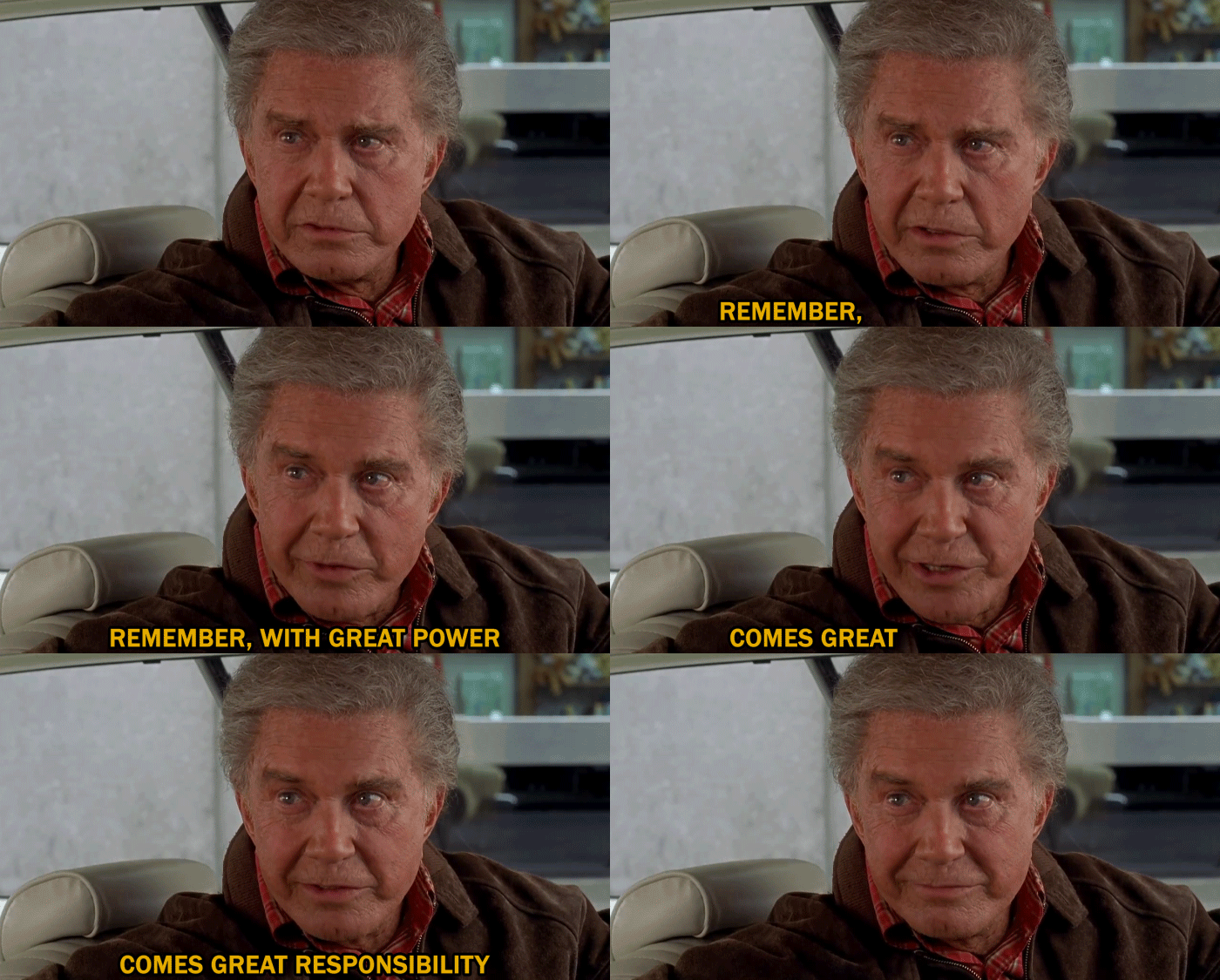
From wanting to be an Avenger, to being a hero for the little guy, to being an avenger then reverting to a neighborhood hero, Spider-Man has had a wild ride. After understanding the importance of being a street-level hero in the events of Homecoming, it’s not hard to empathize with Peter’s hesitance in stepping up and being the next Iron Man. And let’s face it, he’s a man who shoots webs and has a bit of enhanced strength. Compared to Tony with his tech, blasters, repulsors, and armor, Spider-Man shrinks only in this aspect, nevertheless, we get a deeper dive in understanding Peter’s reluctance. And it is this same hesitance that, to an extent, forces Peter to believe he isn’t meant for greater things and that Tony was wrong, which effectively sets up the entire plot of the film. This was evident when he willingly surrendered E.D.I.T.H. to Mysterio out of sheer disbelief that he can rise up and become someone greater, not even to become someone else. So much for with great power comes great responsibility. Did uncle Ben die for naught?
Who should Peter be, then?
It is easy to get confused which side to take, especially if we don’t know that we can opt to choose neither. It’s easy to miss it, but the film answered this question brilliantly and it came from the unlikeliest of characters: Happy Hogan. Yes, that same Happy who thought May and he were going steady. Poor guy. But while talking to Peter during the final moments of the film, Happy delivers one of the most sobering lines in the entire MCU:
“You’re not Iron Man. You’re never going to be Iron Man. Nobody could live up to Tony. Not even Tony […] I don’t think Tony would’ve done what he did if he didn’t know that you were going to be here after he was gone.”
Peter doesn’t have to be Iron Man in order to pick up where Tony left nor does he have to shun such possibility of evolving into someone greater. In his own terms, Peter can be who the world needs and be the person he wants to be. As Spider-Man. Maybe uncle Ben didn’t die in vain after all.









 Jake's Little Void